
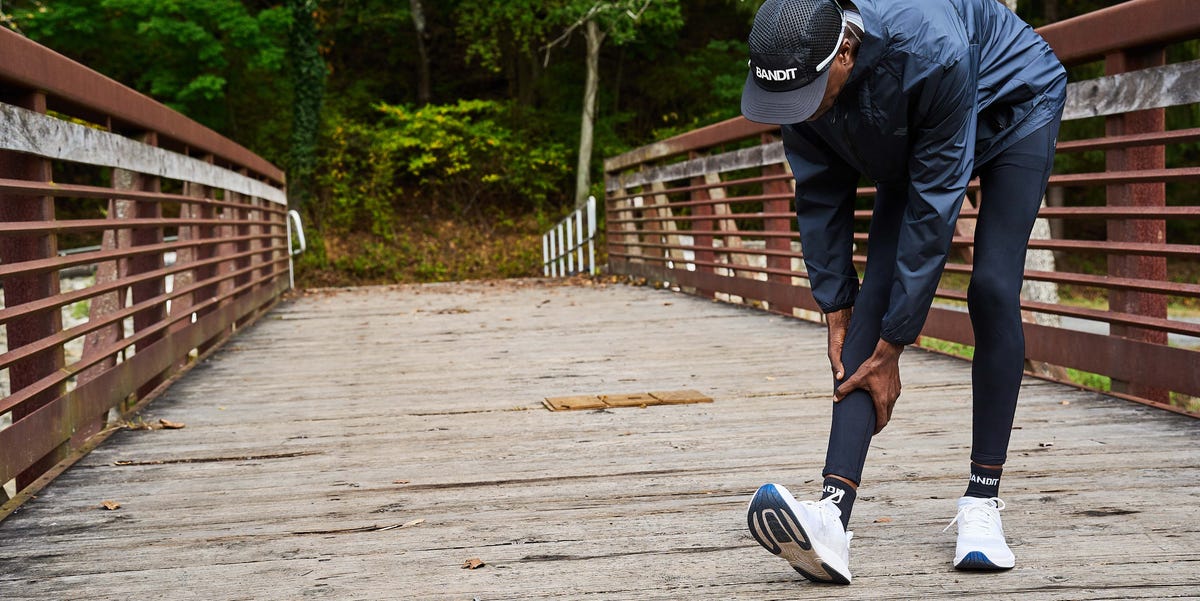
Many runners misdiagnose calf strains as a easy tightness, take just a few days off with out doing something to assist restoration, and return to working as if nothing occurred. However this can be a recipe for catastrophe.
Ignoring the potential warning indicators of calf strains, which does embody tightness and a lower within the vary of movement at your ankle, can decelerate your restoration course of, Ashley Speights, PT, DPT, cofounder of PhytCollective primarily based in Washington, D.C tells Runner’s World.
The truth is calf strains are pretty frequent amongst runners. A examine revealed in Sports activities Medication tracked a gaggle of 258 leisure runners for a 12 months and located 51 p.c of these runners sustained a running-related harm inside that point. Whereas analysis sometimes factors to the knee as essentially the most generally injured space in runners, this examine discovered the calf muscle was most typical. Researchers suspect that’s due to a higher prevalence of non-rearfoot strikers included within the injured group (46 p.c). Calf strains, specifically, accounted for 9 p.c of the full accidents reported, with males extra vulnerable to this harm.
Taking note of warning indicators and addressing calf ache early on may help you keep away from getting totally sidelined. Right here, we break down every part it’s good to find out about calf strains, together with the best way to inform the distinction between a calf pressure and tightness, plus the frequent causes, therapy, and prevention.
What’s the totally different between calf tightness and a pressure?
The distinction between calf tightness and a calf pressure usually turns into clear the second the harm happens. A sudden, sharp ache or popping sensation whereas working is a telltale signal of pressure, says Speights. If the ache worsens the subsequent day, that’s one other sturdy indicator you’re coping with one thing extra critical than unusual tightness.
“With a calf pressure, you in all probability are going to have extra of the lingering ache throughout and even a pair days after [running],” says Lisa Mitro, DPT, a bodily therapist and run coach primarily based in Richmond, Virginia.
In the event you expertise ache with heel raises or any type of motion involving elevating the heel that, too, is an indication of a calf pressure. Calf tightness feels extra like muscle fatigue—a burning sensation paired with problem lifting your heel as excessive throughout calf raises, Mitro explains.
A bodily therapist will normally categorize the severity of your pressure into considered one of three grades: A grade one pressure is normally delicate—basically simply an irritation of the muscle—whereas grades two and three contain extra important injury, corresponding to a partial or full tear.
Any loss in vary of movement within the ankle or decrease leg, notably restricted ankle dorsiflexion (pulling your toes in direction of your shin) or plantar flexion (pulling your toes away out of your shin) can sign the pressure is extra extreme, Mitro explains. Additionally, experiencing problem performing each day actions like strolling can point out the pressure is extra critical.
What causes calf strains?
Strains are likely to occur with explosive actions, like sprinting and leaping, but additionally when altering instructions as a result of your calf muscle mass play a significant position in performing these actions, Speights says.
Overuse also can improve your threat of calf strains. Growing your mileage, working depth, or coaching load with out permitting your physique satisfactory time to adapt to that load is normally the perpetrator, Mitro says.
Different contributing components embody overstriding—when your foot lands too far in entrance of your physique—and forefoot hanging, which locations extreme stress in your calves, Mitro provides. Each trigger your calf muscle mass to work time beyond regulation, growing the danger of a pressure.
Mitro explains weak muscle mass, notably within the hamstrings and glutes, in addition to muscle mass within the foot and decrease leg, also can trigger the calves to overcompensate, resulting in a pressure.
Can you continue to run with a calf pressure?
As a result of a calf pressure can fall into considered one of three classes, the timeline from harm to full restoration varies extensively, with much less extreme accidents taking just a few weeks to heal and extra extreme strains, a number of months, in keeping with the Cleveland Clinic. Whether or not you may run via the pressure will depend upon the diploma of it and your ache degree.
If it’s hurting throughout your run and the ache worsens all through that run, then it’s time for a break, Speights says. But when it’s a low-level ache that’s beneath three on a scale of 1 to 10, and it’s not affecting your working gait or strolling afterwards, then you definitely’re normally protected to proceed along with your working routine with modifications, she says, which incorporates slowing your paces and lowering mileage.
As a result of working at sooner paces requires your calf muscle mass to work more durable, Mitro recommends you skip pace periods first. If this doesn’t assist and your calf ache goes to above a 3 out of 10, then you definitely must also reduce your weekly mileage, she says.
As soon as the ache subsides, you may slowly reintroduce speedwork by beginning with strides, then progressively return to working at sooner paces, Mitro says. In the event you decreased mileage, construct that up progressively too. Keep in mind: Doing an excessive amount of too quickly will increase your threat of a pressure, so that you don’t wish to soar proper again in to the place you left off. Ease into it.
For extra critical calf strains—a partial or full tear within the muscle—step one in restoration is to take day off from working to permit your muscle time to heal. Though it may appear finest to relaxation utterly, energetic restoration is simply as useful.
“When a PT tells you to relaxation, we don’t imply sitting on the sofa,” Speights says. As a substitute, each she and Mitro advocate turning to low-impact types of train like biking or aqua jogging. You may substitute your runs with 20 to half-hour of both exercise, Mitro says.
How do you deal with strains?
Along with day off or decreased depth and/or quantity, restoration contains constructing calf power. Calf strains usually happen as a result of the muscle isn’t sturdy sufficient to generate the pressure wanted to propel the physique ahead throughout a stride, so strengthening it may well result in a faster and extra environment friendly return to working, Speights says.
Along with strengthening the decrease leg, you additionally want hip power, an usually ignored space relating to calf strains.
“Lots of instances once we deal with runners who’re coping with calf strains, we’re really addressing their hips,” Speights says, particularly calling out hip mobility and power as a spotlight of restoration. “I all the time describe to people who our hips, pelvis, and trunk are just like the hull of a ship. So if it’s not constructed nicely, we’re going to get further stress and pressure on the issues that we connect to the hull.” On this case, the additional stress is on the calf muscle.
Mitro agrees and recommends the next workout routines:
Do 3 units of 8 reps for every power train, and a pair of units of 30 seconds for the soleus walks, a minimum of twice per week.
Strengthening different areas together with the hamstrings, quads, toes, and ankles, may even take stress off the calves. For that, Mitro recommends the next workout routines:
Do 3 units of 10 reps of single-leg deadlifts and a pair of units of 10 reps of toe yoga, 3-5 instances per week.
At minimal, Mitro emphasizes you must also be capable to full 20 pain-free calf raises earlier than returning to working.
What are the most effective methods for prevention?
Prevention begins with monitoring your weekly routine, ensuring you’re not overdoing it relating to quantity or depth.
Be sure you have a strong cardio and power base earlier than leaping right into a race coaching plan. Then comply with a wise coaching plan that has an applicable ratio of straightforward to average and high-intensity exercises, with relaxation days after arduous exercises, Mitro says. She normally stacks coaching plans with 80 to 90 p.c of straightforward efforts and 10 to twenty p.c of moderate- to high-intensity efforts. A strong coaching plan must also construct weekly and future mileage conservatively by about 10 to twenty p.c every week, she explains.
The workout routines talked about above may even allow you to keep away from a calf pressure earlier than it sidelines you.
Lastly, implementing a strong warmup routine that features plyometric workout routines may help beat back re-injury, as a result of these strikes assist prime your muscle mass to organize for the bouncing that comes with working. Mitro recommends skipping in place for 15 seconds, single-leg hops, pogo jumps, and lateral single-leg hops for 10 to fifteen reps every earlier than a run.
Branson Brooks is an avid runner and proud Howard College alum primarily based in Washington, D.C. He writes for a number of publications, masking sports activities, tradition, and well being. His writing has appeared in The Root, The DC Voice, Scholar Athletes Sports activities Community, the Baltimore Ravens, and Sports activities Illustrated.