
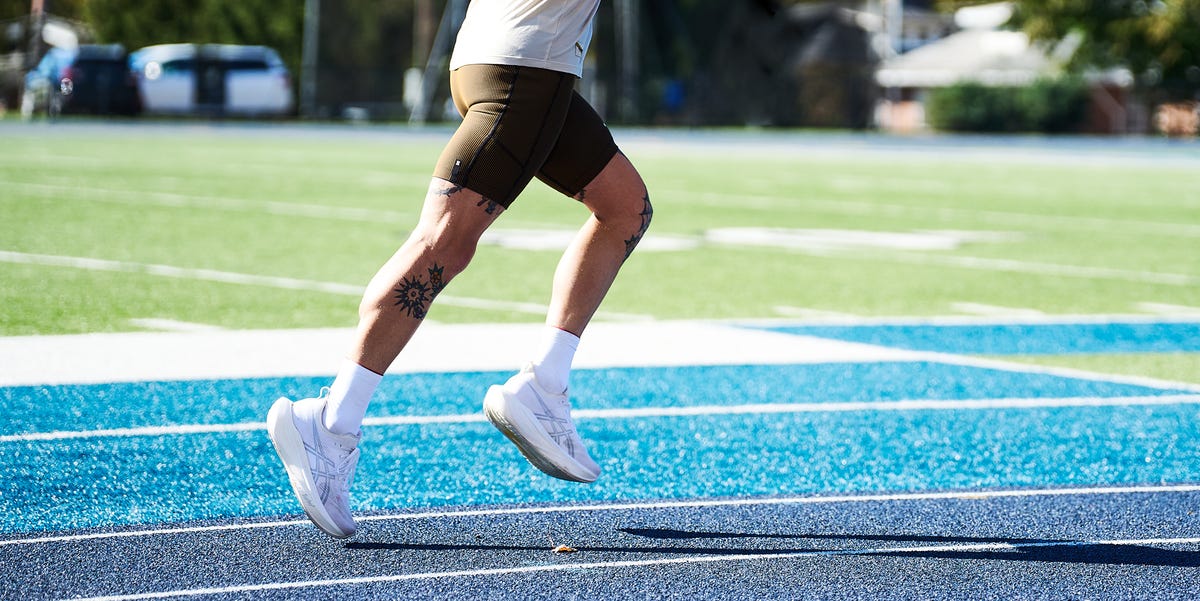
Whereas it’s spectacular to look at the fluid working type of anyone like marathoner Eliud Kipchoge, the reality is everybody has a working type that’s excellent for his or her physique. You gained’t be capable of absolutely match the stride of an Olympic athlete, however there are a number of pointers you may add to your arsenal in relation to making your working extra environment friendly.
And fortunately, you don’t want a full biomechanic research in a lab to start out making some corrections by yourself. Just a few little changes practiced earlier than, throughout, and after your common runs may also help convey new pace positive aspects to your coaching.
In The best way to Run Sooner, hosted by coach Matt Meyer, you’ll be taught some fundamental type suggestions and drills that must be an everyday a part of your routine. Plus, Colleen Brough, PT, DPT, and head of the Columbia College RunLab, will provide you with some steerage on methods to make some easy biomechanical adjustments.
What You’ll Study
In The best way to Run Sooner, Matt Meyer and our specialists clarify:
- The significance of muscle activation with a correct warmup previous to train, and the five-minute sequence you are able to do earlier than any run
- Important type drills that will let you prime your physique for speedier exercises
- A few of the most typical type errors runners make, together with the cues you may attempt to repair them.
Watch Video


Go Deeper
Why You Must Heat Up
Most runners skip warming up—however that’s a mistake if you wish to run sturdy and quick, together with staying injury-free. Research present that just some minutes of dynamic motion earlier than your run will increase vary of movement, improves efficiency, and helps forestall soreness. Do this fast, six-move warmup earlier than each run.

Drills to Assist Your Kind
Kind drills aren’t only for elite runners—they’re for anybody seeking to get quicker, stronger, and extra environment friendly. Elite runners do these drills to maximise effectivity and decrease wasted movement. Practising these actions often improves coordination, posture, and energy whereas serving to forestall harm.
Do them for five–10 minutes after a warmup jog and earlier than any speedwork to prep your muscular tissues and sharpen your mechanics.

Biomechanics of Kind
Poor posture
Hours spent sitting can result in tight hip flexors and a slouched posture that carries over to your run. This limits your capacity to push off effectively and infrequently causes overstriding, which contributes to your danger of harm and reduces pace. Give attention to posture and mobility all through your day—not simply throughout exercises.
→ The best way to repair this?
- Incorporate hip flexor stretches into your routine. (This information may also help!)
- Initially of runs, or midrun if you begin to really feel drained or extra hunched over, raise your chest and lean barely ahead by your ankles. You can virtually think about one thing floating up and forward of you, pulling your chest on a string. This also needs to assist transfer your shoulders again and down. Maintain this place for 20-30 seconds till it feels regular.
- Often change your place each 50 minutes in case you are at a desk all day. This can maintain your hips from tightening up on a regular basis.
Incorrect arm swing
Arm motion performs a serious function in working rhythm and effectivity—and the appropriate type relies on tempo and stability. Sooner runners want a highly effective arm drive to help total-body momentum. For slower runners, exaggerated arm movement could sign a weak core or hip instability, resulting in wasted vitality and poor mechanics.
→ The best way to repair this?
- Cue: maintain fingers shifting “from hip to pocket” and keep away from crossing your mid-chest. Wholesome working includes easy, balanced movement in all planes—rotation, side-to-side, and forward-back. So be careful for:
Reasonable-paced runners could over-rotate or “throw” their higher physique to compensate for weak hips or core.
- Extreme pelvic drop or instability could cause arms to swing out extensive, the place your elbows flail away out of your physique.
Improper foot strike
Your foot strike has a serious influence on working effectivity and harm danger—nevertheless it’s much less about the place you land and extra about how. Touchdown with a flatter foot beneath your physique (as an alternative of reaching out in entrance of your middle of mass) reduces braking forces and helps you progress extra easily. Adjusting your cadence—your steps per minute—can naturally enhance your type and reduce influence.
→ What to Do?
- Intention to land along with your foot nearer to beneath your hips and with a softer, flatter contact.
- Growing cadence by 5–10 p.c helps convey your toes beneath your physique and reduces influence.
- Use a metronome app or Runner’s World cadence playlist to apply matching foot strikes to beats per minute.
- Preferrred cadence varies by runner; 180 isn’t magic, however larger step charges typically correlate with fewer accidents and higher effectivity.


Director of Content material Operations Runner’s World & Bicycling
Brian has spent greater than a decade targeted on creating compelling information, well being, and health content material—with a specific curiosity on fanatic actions like working and biking. He’s coordinated protection of main occasions just like the Paris Olympics, Boston Marathon, New York Metropolis Marathon, and Tour de France, with a watch towards each the skilled race and the participating tales readers love.